
DIRTY DATA DONE RIGHT · EPISODE 3
IN THIS EPISODE
Greg Stadter, Director of Operations at WISHIN, Wisconsin’s state-designated health information exchange, joins host Martin Cody, SVP of Sales & Growth at 4medica, to explain how an HIE connected to 85% of the state’s hospitals reduces the back-office burden of records requests. Stadter also covers why patient matching breaks down even within one health system and how WISHIN is working to reduce SDOH screening fatigue.
Guest: Greg Stadter
Host: Martin Cody
Running time: 18 min
Watch or listen
Follow the show wherever you listen.
KEY QUESTIONS, ANSWERED
According to Stadter, it’s “when the phone calls stop.” Partners that once chased a hospital’s medical records department for faxes can now get that information through WISHIN, which reduces the hospital’s back-office administrative burden. That benefit is often invisible to the hospitals contributing data. Stadter describes the alternative as a phone tree, a call to medical records, faxes and possibly a cost, all of which can take an hour for a single patient’s record.
According to Stadter, patient privacy is at the core of every concern in this space, and wanting to be protective is a good instinct. But HIEs have layers of protection and security around the data and very defined use cases, with treatment at the core. “This isn’t a blank check to use the data however you want,” he says. In return for sharing, hospitals get information that may not be in their own electronic health record, and others caring for shared patients can provide better care.
According to Stadter, WISHIN sees patient matching problems “all the time.” Across the healthcare delivery system, there is a lot of variability in how people enter demographics and the core information used to match patients. The differences aren’t only between health systems. Two hospitals in the same system may do things completely differently, and practices can vary clinic by clinic. Stadter names 4medica as a partner in WISHIN’s EMPI work.
According to Stadter, the “gold standard” is query and retrieve. When a clinician pulls up a patient, the electronic health record automatically queries WISHIN and pulls any information it doesn’t already have natively into the system. Clinicians don’t have to log in to the WISHIN portal, because the information goes straight to where they’re already working. WISHIN isn’t the only organization using this approach. About 20% of WISHIN’s hospitals use it, and Stadter says he’d like to see more adopt it.
According to Stadter, WISHIN’s members asked it to form an SDOH work group last year, made up of about 10 hospitals and 10 payers. The focus was screening fatigue, where the same person is re-screened with the same traumatic questions “five times over the healthcare delivery system.” If providers can see which screenings have already happened, they can avoid duplicates and possibly coordinate care and referrals. Ten health systems now send WISHIN SDOH screening information, and WISHIN is in talks with two payers about contributing screenings for their members.
ON THE MIC

GUEST
Director of Operations
WISHIN
Greg Stadter is Director of Operations at WISHIN, the Wisconsin Statewide Health Information Network. A state statute created WISHIN in 2009 as an independent not-for-profit and Wisconsin’s state-designated HIE. Stadter has been in his role for about two and a half years and calls himself a longtime admirer of HIEs.
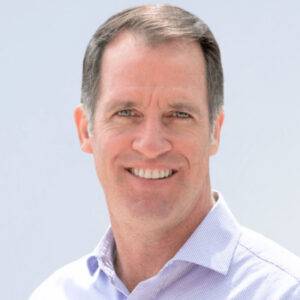
HOST
SVP Sales & Growth, 4medica
Martin has nearly four decades of experience in healthcare commercialization. He has held executive roles at DataBiologics, Madaket Health, Pulsara, Intermedix, Aprima and Allscripts, where he built go-to-market strategies, revenue teams and partnerships that drive growth. At 4medica, he is focused on establishing the company as the trusted healthcare data infrastructure platform.
FULL TRANSCRIPT
Martin Cody: All right, everybody, we are live again from the Civitas conference room floor at their Civitas annual 2026 convention here in Washington, D.C. My name is Martin Cody, SVP of Sales and Growth at 4medica, and today our guest on the podcast Dirty Data Done Right is Greg Stadter from WISHIN. Greg, I need you to tell me as the director of operations, what is WISHIN?
Greg Stadter: Well thanks for having me Martin. WISHIN is, it is it's an acronym as many things in healthcare. It's the Wisconsin statewide health information network.
Martin Cody: Okay.
Greg Stadter: We've been around since 2009 when we were created by a state statute that created us as a independent not-for-profit and the state designated HIE for Wisconsin.
Martin Cody: I want to pull the lens back a little bit on HIEs because you mentioned founded in 2009. So these are not new organizations or entities. They've been around for a while and I think some people thought maybe they went away. How are they still functioning? Because they were federally funded for a long time and then that stopped.
So walk us through kind of the HIE history and then when did you get to WISHIN?
Greg Stadter: So I as I said, 2009 it started. I'm actually only two and a half years into my role at WISHIN, but I've been a longtime admirer of HIE. You know, I think the the industry has come a long way since 2009 in the beginning. I think back then we had early adopters where you had the first five or six people with phones in the state.
That's great to have a couple people to call, but you don't have the full picture. So I think really what we've done for the past fifteen years in our state is fill in the gaps where you now have 85% of the hospitals, across the state, majority of payers, the healthcare delivery system really is has critical mass and a network effect from how big we've got.
Martin Cody: Perfect. And it's it's interesting because you talked about 85% of the hospitals are now connected to you.
Greg Stadter: Yep.
Martin Cody: So they send you data and I'm interested with your role as director of operations, operational interoperability and network execution along those 85. What operational problem is the hardest to see from outside the HIE?
Greg Stadter: You know, I think it can be when the phone calls stop.
Martin Cody: Okay.
Greg Stadter: You know, and so if I can just explain that for a second. I think a big benefit to a hospital is that their partners that are chasing their medical records departments for faxes, for a variety of other parts of the healthcare delivery system can now go to WISHIN. So there's a back office administrative burden that I really think does reduce, but it's often invisible to those contributing partners.
Martin Cody: And that is one of the things that you're trying to solve is all of that friction on the back office side?
Greg Stadter: Yep.
Martin Cody: And how do you do that today?
Greg Stadter: So by moving information that traditionally would have to be moved through fax, through mail, through phone calls, we can now do it electronically directly through WISHIN rather than having a person on either side of the interaction.
Martin Cody: And so when you go out from an outreach perspective to a hospital that is maybe not feeding you information yet, why would they want to feed you information and what would be their hesitancy in doing so?
Greg Stadter: Sure. Well I think patient privacy is at the core of all our concerns in this space. And so I think that's often one that's misguided of hey, I want to be really protective, and that's a great stance. But when you understand that HIEs really have the layers of protection and security to protect that data and that we have very defined use cases. This isn't a blank check to use the data however you want. It's really the core of it is treatment.
Martin Cody: And so give me a kind of a go to use case for a a net new entity sending you information.
Greg Stadter: Well I think one of the ones that's most compelling to our clinicians is patient outcomes. That allowing others caring for the shared patient to have the information that you have in front of you helps them better care for your patients. In return, you also get access to information you might not have access to in your own electronic health record.
Martin Cody: So the information has to probably be richer because it's coming from multiple sources, so you get a more complete picture of of the patient's care. And I I would imagine that there's people out there listening that work with HIEs or that may have been in that camp of hesitancy is should I share information or not share information.
Greg Stadter: Yep.
Martin Cody: But if they're going to empower their providers with a more complete picture, the HIE is the simplest way to do it.
Greg Stadter: It is. And you know individuals will get this information one way or another when they're entitled to it. It's just gonna be a more painful, less efficient process. They're gonna get this information no matter what, you might as well do it the most efficient way possible.
Martin Cody: So how would they give me an example of how they would do it when it's not efficient?
Greg Stadter: Sure. So, you know, I might make a call, be on a phone tree, finally hit a medical records department at a hospital.
Martin Cody: Okay.
Greg Stadter: Then, you know, have to go through all the rigmarole, maybe give them information, maybe faxes, maybe there's cost involved with it. Somehow you're gonna get the records back either by fax or by email. But you know, this is an hour spent on one patient on one medical record.
Martin Cody: Exactly, and have to do that over tens of thousands is not efficient. Scale that exactly. So we've talked previously in this podcast about patient errors and patient duplication, and then you throw into the mix of that data cocktail, if you will, SDOH.
Greg Stadter: Yep.
Martin Cody: Which adds a different uniqueness of complexity. So how do patient matching errors surface statewide today at scale?
Greg Stadter: You know, we see it all the time and that's why 4medica has been such a great partner in our EMPI space because what we see is that across the healthcare delivery system, there's so much variability in how people put in demographics and the very core information that lets us match patients.
I'll give you an example that we were talking about earlier today of the same health system. Maybe hospital A and hospital B of their holdings are doing things completely different. So it's not just system by system, it it can be even clinic by clinic.
Martin Cody: Interesting. And and you guys see it kind of up close and personal because you get all the information. And you're right, in Wisconsin there could be an organization that has 30 or so endpoints, a large health system with 30 or so endpoints, and each one of them does registration a little bit differently. And that patient is moving in the community to other communities, and so therein lies the duplicate problem.
Greg Stadter: Exactly.
Martin Cody: Yeah, I could see how that could be a problem. Is there a, well let me back up a second. Where does technology connected data sit that the clinician and care coordinator have access to as a result of WISHIN?
Greg Stadter: It looks different ways for many organizations. I would say the gold standard is a system we have that's called query and retrieve. And what that does is it lets an electronic health record, query WISHIN, and then pull back natively into the system any information they don't already have. What's nice about that is rather than a physician or a clinician accessing our portal, they just get the WISHIN information invisibly sent directly to where they're working anyway.
Martin Cody: And they so they request it or it just is automatically fed?
Greg Stadter: When they pull up the patient it automatically feeds it, queries and and retrieves it into the health query.
Martin Cody: And is query and retrieve a WISHIN built solution?
Greg Stadter: WISHIN uses it, multiple organizations do as well. So we're not the only one. I would say about 20% of our hospitals use it. I do think it's a gold standard of not making people leave where they're working anyway.
Martin Cody: Right.
Greg Stadter: So we'd like to see that adoption increase.
Martin Cody: What is the the hardest challenge that you're facing right now, twofold as an organization, organization wide, and then you individually on the ops side, it could be the same, right? It could be the same challenge, but what do you see from an organizational standpoint, what is WISHIN tackling that is extremely difficult, and then what are you on the operation side particularly focused on right now?
Greg Stadter: I think organizationally, we just have a lot of things going on right now. And and that's a a great problem to have, but it's also how do we focus on everything at once? We're really deeply involved with rural health transformation for the state of Wisconsin. So really getting our teeth into that, as well as a new minor safety plan, behavioral health risk platform that we're building for the state.
So we have several new projects that we're doing while we're trying to keep our core operations of the day to day of our HIE. We also just launched last month, WISHIN 2.0, which is a new user interface with several new features that we're really excited and and been excited to be rolling that out to participants throughout the month.
Martin Cody: I'm amazed. I don't know, I mean, why wouldn't the healthcare system or or hospital want to interact with WISHIN?
Greg Stadter: Yeah, I I don't have a good reason from where I sit.
Martin Cody: Right. And then we talked a little bit about the social determinants of health. I'm trying to figure out where where are you playing in that? Because it's starting to become a more mainstream topic of SDOH. Folks are starting to get looking at solutions for that. So how are you guys wrapping that into some of the core offerings?
Greg Stadter: You know Martin, our members actually asked us to form a a work group last year around SDOH. We had about twenty participating organizations, about ten hospitals and about ten payers.
Martin Cody: Okay.
Greg Stadter: So we we got both to the table and really the the topic of discussion was how do we reduce screening fatigue? Which is this idea that you know the same individual is being re-screened with the same traumatic questions, you know, five times over the healthcare delivery system. And if we can get some visibility on at least what screenings have happened, we might be able to at least, you know, not do duplicative screenings. Even better would be can we coordinate with some of the care and the referrals that are already happening?
Martin Cody: Very good. Interesting. And so it's I find it neat from a perspective of these are your members, this is who you serve, and they came to you and said we need this solution. Let's form a work group.
Greg Stadter: Exactly. And so we've had some exciting progress. As of now, we have ten health systems that are sending us other SDOH screening information. It's a great start. And we're in in conversations with several others to do it as well.
I think the next step and the last mile is getting the payers to do the same. So I will say there's two unnamed payers we're currently in conversations with of can they contribute in a different way. It wouldn't be C-CDAs, but in their own way, contribute screenings for their members for the benefit of that member.
Martin Cody: Right. And so give me some incentives for the payers because you got them to the table and why were they excited to have and facilitate the dialogue?
Greg Stadter: Well, I think many of them have niche programs for members and they don't know who to refer in. Who is housing insecure? I know one health plan really forward thinking in Wisconsin that will give some modest housing subsidies to prevent eviction. But if that isn't surfaced to them, they can never deploy that resource to those members that need it.
Martin Cody: Yeah, that would be a problem. So what you've been there a couple of years now. Is there anything in particular that you really, really get excited to solve?
Greg Stadter: You know, this SDOH space is an interesting one because I think it ties with a lot of other parts of the the delivery system that are overlooked. Mental health and behavioral health is an area I think is ripe for more work with HIE. I think public health is another area that's really ripe. But I think, you know, as we're getting critical mass with with payers and with hospitals, I think what's next is exciting.
I another area that we're really focused on right now is post post-acute facilities. Have a new partnership with PointClickCare. I'm really hoping to fill out that side of the network as well.
Martin Cody: And is that being driven by demand or is that being driven by members or both?
Greg Stadter: I would say from members. And and that's a great thing about being an independent not for profit for the state of Wisconsin. We're accountable to to all our two hundred plus participating organizations. So when they tell us this is the priority to flesh out the network, we're gonna listen and that's the direction that we go.
Martin Cody: Interesting. I want to go back to the behavioral health and mental health because I think that need is only growing. And if there's anything that was positive that came out of the pandemic, it was the explosion of virtual mental health care and virtual behavioral health care. But now that generated a ton of data on those patients and that data sits somewhere.
And so now if these organizations are participating with you, you're able to facilitate the sharing, first the ingestion and the sharing, and is that going to be a large part going forward of being able to with the SDOH circulate that data?
Greg Stadter: I do and I think that's another setting where people are often screened for those SDOH. So if if they knew that a screening was done last week, that might s save them from doing that step.
Martin Cody: That's a good point because then it don't have to go through the whole thing over and over and over.
Greg Stadter: Much to the patient's chagrin.
Martin Cody: Yes. So what would what would surprise someone to learn about an HIE that maybe you uncovered that surprised you for someone listening that is in the HIE space? You know, how do you how do you spare them the anxiety, the the anguish and the kicked in teeth and bloody nose, so to speak, of a problem that you've solved that you're going to alert them to that they're going to face as they adopt HIE?
Greg Stadter: Well, maybe I'm being nerdy because I am very excited about this, but I I will share one example that's directly related to SDOH but also medical. And that's the state of Wisconsin has county based aging and disability resource centers. These are organizations or county functions that do benefit determination when someone's disabled, for example, you're eligible for certain benefits.
Up until that point, they were asking the health systems, getting faxes, everything we talked about at the top of the discussion, now they can go into WISHIN, see that diagnosis, see the it it aligns with the disability that's eligible for benefits, and they're able to get someone enrolled same day.
Martin Cody: Wow.
Greg Stadter: So so that is it's really streamlined the process. The other thing I'll share about that is that's the one area in the state of Wisconsin where state Department of Health Services has sponsored all the ADRCs throughout the state to have access.
What's really been inspiring about that is kind of in the current environment where we're thinking a lot about rural health, it leveled the playing field. You know, before that it was a couple of really well resourced counties had it, the rest didn't. So now it's just a resource for all 72 counties across the state.
Martin Cody: Well that's fantastic. And hats off to the state for their involvement.
Greg Stadter: Absolutely.
Martin Cody: And I think that would be one of the challenges if you have an HIE and the state is moderately active or limited activity, I would find your success in that capacity to be difficult to obtain.
Greg Stadter: It is without that critical mass. I think that can be really challenging. But I will say, you know, I I a great thing about this conference is I get to talk to my colleagues in all forty nine other states.
Martin Cody: Sure.
Greg Stadter: And you know, I see them come up a lot of ways. Sometimes you just need one community that gets it. They build it, they prove it, and then everyone else wants on board. So there's a lot of ways to skin the cat.
Martin Cody: And if you could give advice to someone who's just starting out in an operational role at an HIE and they're 60 days in drinking from the fire hose, what would you tell them to spare them the pitfalls that you may have encountered and learned the school of hard knocks?
Greg Stadter: Well sixty days into the job, I realized how little I knew. And I I think my advice would be give yourself grace. I'd say two and a half years and onto the learning. And the industry isn't what it was two and a half years ago. It's constantly moving. So just when you catch up, don't worry, there's gonna be something new.
Martin Cody: Well that's interesting because that brings us to the future and and where do you see not only HIE development, but specifically WISHIN? We've talked about the behavioral health, the mental health. Is there anything that you're excited about from a collaboration standpoint, from partnerships that you're seeing coming to fruition is just going to allow you to bring more efficient care to the members?
Greg Stadter: Absolutely, we got a lot of things cooking. As I said, you know, trying to flesh out the behavioral health, post-acute, public health, there's a lot of just network growth we're doing. We also have a new use case for population health analytics.
And so I'm really excited to deploy that for both public and private partners throughout the state, participants, on behalf of their members and really be able to see a a patient not just care at one system, but you know, systemically see their journey across the whole care delivery system. So I'm really expecting
Martin Cody: I like that as well. And if someone wants to get a hold of you because they have a follow-up question, what's the best way for someone to reach out to Greg?
Greg Stadter: Yeah, they can email me and I'll just say it. It's G-S-T-A-D-T-E-R. That's gstadter@wishin.org.
Martin Cody: Perfect. My guest today, Greg Stadter, operational director of operations at the WISHIN, the Wisconsin State Health Information Network, and it's been an absolute joy talking to you and learning some of the things you're doing and working on and some of the impacts you're having. So thanks so much for sharing.
Greg Stadter: Martin, thanks for having me.
Transcript lightly edited for readability.
MORE FROM DIRTY DATA DONE RIGHT
New conversations with the leaders tackling healthcare’s dirty data. Follow the show wherever you listen.
| Cookie | Duration | Description |
|---|---|---|
| cookielawinfo-checkbox-analytics | 11 months | This cookie is set by GDPR Cookie Consent plugin. The cookie is used to store the user consent for the cookies in the category "Analytics". |
| cookielawinfo-checkbox-functional | 11 months | The cookie is set by GDPR cookie consent to record the user consent for the cookies in the category "Functional". |
| cookielawinfo-checkbox-necessary | 11 months | This cookie is set by GDPR Cookie Consent plugin. The cookies is used to store the user consent for the cookies in the category "Necessary". |
| cookielawinfo-checkbox-others | 11 months | This cookie is set by GDPR Cookie Consent plugin. The cookie is used to store the user consent for the cookies in the category "Other. |
| cookielawinfo-checkbox-performance | 11 months | This cookie is set by GDPR Cookie Consent plugin. The cookie is used to store the user consent for the cookies in the category "Performance". |
| viewed_cookie_policy | 11 months | The cookie is set by the GDPR Cookie Consent plugin and is used to store whether or not user has consented to the use of cookies. It does not store any personal data. |