
DIRTY DATA DONE RIGHT · EPISODE 1
IN THIS EPISODE
John Lynn, founder of Healthcare Scene and Healthcare IT Today, joins 4medica’s Martin Cody to explain why AI can’t overcome bad data. They explore the psychology of data denial, how rapid hospital acquisitions leave records no one fully trusts, and why leaders must make it safe to admit past mistakes before deploying next-generation technology.
Guest: John Lynn
Host: Martin Cody
Running time: 32 min
Watch or listen
Follow the show wherever you listen.
KEY QUESTIONS, ANSWERED
They start with generative AI. At a Sway Health conference panel, John Lynn asked CIOs how they find new solutions: one used Gemini because her organization is a Google shop, another used Copilot because theirs is a Microsoft shop, and both asked it to build their starting list. Lynn says they don't fully trust the answers, but they arrive at vendor conversations already educated, so conferences have become a place to go deep rather than to discover.
Lynn sees three groups. The most common knows its data is ugly and avoids looking, using "we're not ready for AI" as cover. A second group knows its data is bad and is cleaning it up, including identity management and reconciling records across acquisitions, while running AI projects that don't depend on that data. A smaller third group has done the work, knows where its data is good and bad, and can move much faster.
According to Lynn, ambient AI scribes didn't need the existing record. They create their own data by recording the conversation between the doctor and patient, so the note is built on quality data captured in the exam room rather than on prior data that may be wrong. Now that scribes draw on the record too, they face the same problem: they could write a better note with better data.
Lynn expects boards and leadership to force the issue as they push AI adoption, because AI needs better data. The key is giving people a place to admit that something went wrong in the past, even if they caused it, and treating past decisions as a sunk cost. Leaders set the tone by admitting their own mistakes, asking tough questions instead of accepting rosy reports, and celebrating the people who bring bad news forward.
Lynn warns that AI will summarize and spread dirty data. When two records are matched incorrectly, it can surface another person's information; when data is poor, it can miss information the clinician needs. Today physicians often compensate by reordering labs and imaging, which adds cost. The risk is that they come to rely on AI summaries and assume the information is complete and correct. As Lynn puts it, AI is only as good as the data that you have.
ON THE MIC

GUEST
Founder
Healthcare Scene
John Lynn is the founder of Healthcare Scene and Healthcare IT Today, which has published more than 18,000 articles on health IT alongside podcasts and videos. A tech professional by background and an entrepreneur at heart, he started in healthcare implementing an electronic medical record at UNLV. His work today also includes Sway Health.
HOST
SVP Sales & Growth, 4medica
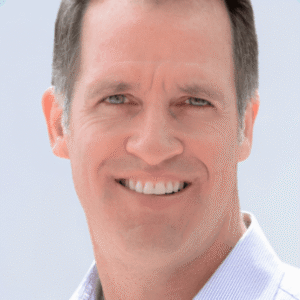
Martin has nearly four decades of experience in healthcare commercialization. He has held executive roles at DataBiologics, Madaket Health, Pulsara, Intermedix, Aprima and Allscripts, where he built go-to-market strategies, revenue teams and partnerships that drive growth. At 4medica, he is focused on establishing the company as the trusted healthcare data infrastructure platform.
FULL TRANSCRIPT
Intro: Welcome to 4medica's Dirty Data Done Right. We're talking with the leaders shaping the future of health care by tackling one of its most uncomfortable truths, dirty data. From the revenue cycle to patient safety and patient identity, we explore how cleaning up this mess drives stronger outcomes. Let's lean in and clean it up together.
Martin Cody: All right, everybody. We are thrilled here at 4medica to welcome the inaugural guest of the Dirty Data Done Right podcast. You may know him if you have had any association with healthcare IT. John Lynn is with us today. He is the founder of Healthcare IT Today among other things. And so we're going to get into his background both as an entrepreneur and as a healthcare IT expert, what it took to get there, and more importantly some of the things that he is seeing today impacting healthcare IT on the ground level. So John, welcome to the broadcast.
John Lynn: Yeah, thanks for having me. It's an honor to be selected as your inaugural one. So you know, I've known 4medica for a long time. I think I even spoke at one of your dinner events like I don't know a while ago. That was way before you joined. But uh you know, so you know, I've been around for a long time. You're you're right about that.
Martin Cody: Well, that just means you have a lot of of battle scars, so-to-speak, and you know what to do and what not to do. And also one of the things I love about you is you're genuinely entrepreneurial curious both inside of healthcare and outside of healthcare. And people know you today most likely for the Healthcare IT Today guy. But what would surprise people to know about you outside of healthcare?
John Lynn: It's interesting because I was actually discussing this with someone I think yesterday. I was like, you know, at that my core, I love the way technology can transform anything. Not that technology is always the answer, but technology has an ability to open up new doors in any industry, any situation. It could change what it's doing. So, I love that. And I also love the fact that a nobody in Las Vegas or I guess now I'm in Las Vegas and Salt Lake, but you know it can could influence an entire industry just by sharing good quality content and good information.
So you know to your point I am an entrepreneur I think at my core. I'm a tech guy by background, entrepreneur at my core. Currently my form of entrepreneurship is content with Healthcare IT Today and Sway Health and doing articles and podcasts and videos and everything that we do. But yeah, at the end of the day, I like to provide value to people. I like to build communities.
So, one that's outside of healthcare, you'll like this one. You probably don't even know this one, but uh I actually when I was starting my healthcare IT blog, really an EMR blog, I'd say at the beginning, uh it wasn't really taking off until the stimulus package hit and $36 billion of stimulus worked for me. So, that was good. But before that, I was still exploring trying to find, you know, my niche and make money and how does SEO work and, you know, how do I get listed in search engines?
And so I discovered a reality TV niche. So I was essentially the ESPN of talent, reality TV for Dancing with the Stars. So You Think You Could Dance, America's Got Talent, and we published, I mean, we've published thousands of articles. I broke who was on Dancing with the Stars multiple times before uh before they were on GMA announcing who was on there, you know. Anyway, I have lots of stories tell reality TV if you want. So anyway, there's a little off the non-healthcare experience uh and I could talk about for a long time.
Martin Cody: So, do you actually dance?
John Lynn: I've been known to dance, you know, to help party.
Martin Cody: Well, technically we've all been known to dance.
John Lynn: I I love swing dancing. That's what that's my favorite. Uh, you know, country swinging, but you know, you can swing to pretty much any music. That's my favorite. You know, I've done a lot of two step, waltz, a little bit of cha cha stuff. So, that that's the kind of dancing I love. So, yeah, I do love it. I'm, you know, definitely a social dancer by far, but I do enjoy it.
Martin Cody: Now, that's interesting that you kind of got bit by an SEO bug and that was early on before it became a household phrase for marketing and understanding the metrics and the data around SEO and now that has transitioned to AEO a little bit and GEO. So from your perspective - and I'll get into it in a second with regards to the compounding success you've had with healthcare IT - but talk a little bit about what you're seeing through the marketing lens as it relates to healthcare around AEO and how it differs from SEO.
John Lynn: You know so at our Swayy Health conference we had a bunch of CIOs on a panel - we call it our customer panel - and like you know I asked them the question, I said: "how are you discovering new solutions and new products? How are you doing it? They said of course we're going into GenAI. One went to Gemini because she's a Google shop. One went to Co-Pilot because they're a Microsoft shop and then we asked them first to start our list, right? And then we use that to dive deeper to understand each of those products.
So the reality is we are using GenAI to discover. Now, I don't know if we fully trust the responses, but it's giving us information so that when we connect with the real humans at those companies, we can vet them in a way and become educated in a way that we didn't previously. And so, I think that's the shift that's happening. And, you know, thankfully, Healthcare IT Today with 18,000 articles obviously is telling the GenAI what is real in health IT.
You know, I was sharing with you like Google tells us that 1,700 times a day, Healthcare IT Today is being referenced in a Google AI overview. And that's just Google, not ChatGPT or Claude or any of the others. So like, right, that's one how much everyone's searching, which is amazing to me, like that people are searching that much for solutions and yet they are right. Um, and they're getting that response.
So, you know, we've just fundamentally changed. Like go way back, Martin, right? Like we used to go to conferences to discover solutions because that was the only way or maybe we'd get a magazine every month or so, right? Like, that's how you would discover what you need. Correct? We're not doing that anymore. We already discovered the solutions. We probably know all about it. And now if we go to a conference, we're diving deep with the person and we already understand what's going on. And so it's a very different conversation than it was before because GenAI and even search engines before that made discovering the information so much easier than it was before.
Martin Cody: It's interesting you say that because you're absolutely right. If you go back far enough, you walked the trade show floor to find out what new solutions were out there, whether that was at HIMSS, you know, way back in the day to determine, okay, we need to solve this problem. Let's go see what's out there. and you literally had to do a physical search at the larger conferences to where most of the solutions were gathered. Now today that search is obviously different and and you just talked about it at the Sway Healthcare conference with regards to AI and the CIOs discussing it and we talk frequently every day amongst our peers, colleagues, prospects about AI readiness. AI is ultimately learning from and operating on the data that healthcare gives it. As you just discussed with the number of 17,000 plus articles you've written, but how much attention do you think health care is paying to whether that underlying data can actually be trusted?
John Lynn: It's a really good question. I would say there there's almost like multiple categories of personas out there that you know when it comes to data. I unfortunately, actually think the most common persona is they know their baby is ugly. You know, they know their data is ugly and they're afraid to admit it to themselves. Like, and so many are kind of avoiding the solution because they know if they dive into the solution, they're going to see that their baby's ugly, that the data is not the way it should be, and so then they're not going to get the outcomes they want. And so there's a bit of denial in this group, right? which is like, hey, if I just act like, oh, I'm not ready for AI. I don't trust it, whatever, then I don't have to go and admit that my data is bad.
Then there's a second group that's like, hey, I know my data is bad. So, I can't use the AI until I clean up my data, until I have good identity management within my data, until I've reconciled it across the five acquisitions that we've done to make sure that the data works across all these organizations. Like they know that they have this problem and so they're like I want to address this, and sure, I'll do a few AI projects around here that maybe don't need that full data spread - you know that's fine, let's do it you know.
Ironically that's why AI medical scribes and all this ambient voice has done so well is because it didn't need the data. It was creating its own data in the exam room by recording the exam room session and so they were able to create a note based on quality data which was recorded right there with the doctor and the patient and didn't necessarily have to rely on the previous data that was maybe not correct, right? And so that's why it's been so successful. But, anyway, back to what we're saying - like people are saying: I need to clean up my data to be more successful and that's true even with the AI scribe which is now digging into that data and saying, no I could do a better note if you can give me more data.
And so you know, and then there's the third one that's actually done the work. I know a few organizations, they've done the work, they've cleaned up the data that they know that where their data is good and where it's bad and they can actually start running much quicker. So, I think there's a whole spectrum from denial to, you know, I've done the hard work and I'm ready to see success with what I'm doing. So, you have the whole spectrum.
Martin Cody: It's interesting you say that because those first two camps, the one denying that their baby is ugly, everything is fine here, nothing to see type of stuff. And then you have the one that has recognized, yeah, we've had 15 acquisitions in the last six years. All of the data that we've acquired just can't be pristine. So, we may have done the integrations appropriately, but are we moving dirty data within our pipes and we don't even know about it? And then you've got the ones that have recognized it and done the mitigation. But how does a person from the first camp, not believing that their baby is ugly, transition into the second camp to say we've got an issue and we need to address it? And my fear is that they'll address it quicker when there's a catastrophic event, but it shouldn't have to get that far down the path. What is your interpretation or idea on how do you move from camp one to camp two?
John Lynn: You know, I I think the reality is they're not going to have a choice because they're going to be forced by their board and their leadership to leverage these AI solutions. And these AI solutions need better data. And so, you know, in order to achieve that goal, they're going to have to face the, you know, face it and be able to clean it up. And so, I think they're going to be forced to.
But here's the thing I think that's key, and I've probably heard this a lot from our CIO podcast and all the CIO leaders that I've talked to. They have to create, as leaders, a safe space for that person to admit that in the past something may not have gone right. And by the way, the person that's admitting that may have been the one that caused it, right? Because that is a scary thing to do. I mean there's so much psychology to this, you know, as far as our own shame we have about our choices that we made in the past. And so a leader needs to be able to go to that person and go to their teams and say, "What's happened in the past is a sunk cost. And we're not going to blame you for past transgressions because we all have them."
And some of the transgressions, like you said, are just acquisitions. They're not individual transgressions, but they're, you know, they were forced upon them because guess what? The CEO said, "We're acquiring them." And did they do an IT check? No, not really. They said, "You're cut, you're you're taking them either way, and we'll figure out the IT later." And that's the reality of most acquisitions these days. So, some of them aren't an individual, but some of them are. Some of them are how you implemented the EHR and that you didn't enforce good controls and that you didn't, you know, implement this the way that you could have and you would have maybe now.
So, it's okay for them to understand like, hey, what you did in the past, I'm not going to judge you on. I'm going to judge you where we're at and let's move forward. So, I think creating that safe space, which I think is a bad term. It's kind of been abused, I think, in the media, but creating a place where they can be human and admit that they maybe did some things in the past that weren't ideal and now we have to recover from them. I think that's a good place to start.
Martin Cody: Well, it's interesting you say that and I agree with you - and one of the things you said was talk about leadership and I think you have to have effective leadership whether it's the CFO, CEO to sit people down in a room and and basically give them the opportunity of a judgment free zone type of thing to say, "tell me something I don't know that scares the hell out of you about XYZ" or "tell me something that you wish you would have done differently that may manifest in six months or a year from now that we're going to get blindsided by." I need to know these sorts of things and that kind of is, you know, analogous to your statement about giving them a safe space, but they can't feel that this is going to be a career-limiting discussion. They have to feel empowered to be able to share the good, the bad, the ugly. And that I think stems from an effective leadership, an effective CEO or the CIO has to go to the CFO that says we may want to keep an eye on this because some decisions were made 12 months ago that were out of our hands that looks like it could come back to bite us. So how do you empower that effectiveness of leadership to be able to have that frank candid conversation with staff so that they are able to share those things? So that the health system or hospital doesn't incur, you know, devastating outcomes or calamity and can continue to help serve the community?
John Lynn: Yeah, I'm not sure I'm the best one to answer how to be a great leader. Uh, you know, but, you know, I'd say there's a few things I've seen and and one of them is the leader themselves being able to admit when they're wrong. You know, if the CIO is always saying, "I've never made a mistake," then it doesn't allow anyone else to make a mistake either. So, I I think that being human themselves and being okay to admit some mistakes themselves, which is hard to do, right? Like it's hard for all of us to do. Uh, you know, I think that is one example of how you can be a leader that does that.
You know, the other one is, you know, being pretty frank and upfront when they're providing a rosy report. You know, asking the tough questions. What's going wrong? You know, like what's going to be a barrier for you, right? And like again, I'm probably not the best at phrasing these, but you know, diving in and and wanting to hear that and then celebrating when someone shares.
I heard this story. I think it was about Ford. Ford was doing their cars and they, you know, they they would go to the CEO and everyone would bring these rosy reports and yeah, everything's on time and we're on schedule and the project's going great and and and. Then they weren't delivering cars on time and they were behind and they were budgets and he's like, "What's wrong?" And so he went to a meeting and one of the people came to the meeting and said, "Hey, it's all red. This is wrong and this is wrong." The CEO stood up, started clapping, right? Yeah. And said, "Thank you for doing that." And he made it acceptable to be off and he said the next meeting everyone came and said, "Here's what's really happening." And then they were able to address the issues rather than, "Hey, the CEO wants to hear something rosy and great and everything's good." He created a culture that's like, "I want to hear about the bad things so we can collaborate together to solve them." So I think it's the same thing in healthcare. Guess what? There's always problems. We know that healthcare is complicated. And if we are in denial, we're not going to solve them.
Martin Cody: No. And it's funny because we're referencing leadership here at kind of the C-suite of a health system or hospital. But it carries itself all the way through the hospital all the way down to the clinical. The physician is a leader as well, leading patient care and he or she is only as good as the information that they are looking at to be able to treat the patient and they have to also be able to have the freedom and capacity to stand up and question certain things. And I'm relating this to, you know, when we talk about dirty data in health care, we're talking about everything from duplicate patient records, overlays, incomplete demographics, fragmented demographics, provider information, and clinical information. All of it has dirty data in it. Do you think based upon the lens that you see and have these conversations with, that health care is beginning to recognize that this is an enterprise risk rather than merely an IT risk?
John Lynn: It's a good question. I think that we haven't recognized that in most organizations and it's unfortunate because of what's happening - especially with AI - because guess what? We are flowing a lot of data at the doctor... I mean between the different exchanges that are happening: TEFCA, QHINS. You know that when you look at the billions of of records that even Epic alone is sharing between organizations, we are throwing so much data at these providers. The only solution I think we can do for the providers is AI to go through it and kind of assess it right now. You know that's happening in a big way. Epic has their solution. There's a bunch of other third party solutions that are summarizing all of that data for the doctor.
Now play that forward, like okay, so AI is now summarizing the data. Do I trust the data? If the dirty data is dirty, guess what AI is going to do? It's going to summarize dirty data. It's gonna continue to propagate dirty data. It's not going to provide data that it should. It may provide data for someone that's wrong. So, let's, you know, we don't want to admit this, but we hear stories about it where two records are matched incorrectly and now you're getting data for a Martin Cody who lives in Africa as opposed to one that lives in the US, right? Like, this is going to happen.
I I didn't understand the scale of this problem until I worked at UNLV and we imported all of the students into our EMR and every day we would upload all the students so we always had the students already registered and ready. I was shocked, with a population of 30,000 students, the number of people who had the same name and the same birthday - in just 30,000 students was astounding, right? Like it it was crazy that you know, you would think that would be unique enough. Now expand that to organizations that have a million patients. Of course, there's going to be duplicates.
So my point is there's both sides to this data problem which is you may give me data for the wrong person and I do it, or you may not give me the data for the person that I do need because you know the data is poor. So I think both of those are risks. I think you know the only thing that somewhat uh tempers this enterprise risk, that you talked about, is the fact that doctors have been doing this for a very long time. They've been treating patients with incomplete data. So right now the doctor is kind of saving us in some ways because they're like well I'll just order an extra lab. I'm not going to trust the lab that comes across. I'm just going to order it again. I'm gonna do that MRI again because I don't know if I can get that, you know, and if I trust that MRI, whatever it might be. And so they just order it again, which obviously creates a lot of duplicate costs and other things, too.
So the doctor's been saving us in a lot of ways, but I think we're going to see this shift where doctors start relying on the AI and they think they have all the information when they don't. So, you know, that, you know, or they might have the wrong information. So, I don't know. It's going to get complex really quickly. Um, but the key there is AI is only as good as the data that you have. And if you have the wrong data, AI can't overcome that.
Martin Cody: No, that's a great point. And it's funny you talk about the UNLV experience. And that was only a data set of 30,000. And I can use my name. I I have to happen to have one of those names that is legitimately two first names. And so that happens often when I check into hotels. We don't have a reservation under Cody. Oh, we have one under Martin. and and it's it's Cody Martin.
John Lynn: Yeah, exactly.
Martin Cody: And these are very cosmetic, very simple challenges as it relates to patient identity. But when you talk about a community that is serving tens of millions of records, a health system that is rather large, it's not do we have patient identity challenges or patient identity risk? It's how large is it? Because you have it, because of what you just talked about, with duplicates and overlays. And I don't think the health system, I think there's more people in the "my baby is ugly" camp, and we need to move them into "hey let's start addressing this" camp and that's where the leadership comes in and it's kind of one of the premises behind this show of dirty data done right - is that bad data is only half the issue. Organizations ultimately have to basically determine, and you're mentioning that the doctor is doing this on the fly right now, what is material? How do I remediate this? How do I prevent this problem from simply building? I'm hoping and I'm wondering if you are seeing organizations become more sophisticated about addressing this problem.
John Lynn: We do and I think they're being forced to because the data is coming in and then the doctors say, "wait this data doesn't make sense" and so the doctors are saying, "hey if you want me to trust this, you need to be accountable for it." So we see that happening. I think we also see you know the tool set that's available to us to reconcile it is so much better than it was before. Uh you know so I think that's helping in in a lot of ways as well.
You know the reality is this: though when it's done right it becomes almost magical and that's one of the cool things - and we're at this period where that magical feeling of experience is happening for doctors more and more. I hear it all the time from them. I hear it from doctors in the ED who are like, "Guess what? I got all this data from another ED and this person's a drug-seeking addict that's trying to abuse the system and I was able to thwart that. Whereas before, if I didn't have that data, I probably would have prescribed the narcotics for him and I would have gone on, right?" Or whatever it might be. Correct.
We hear other examples: the the rural health doctor who then has access to the data from the large health system and they realize, wait that patient was admitted to the large health system a month ago and I never heard about that and I'm their primary care doctor in this rural environment and they're coming in for their diabetes and I look and I say wait hey you were admitted for you know a heart issue. Could we address that too. Let's talk about that you know that so we are seeing that data starting to bridge you know the gap and and really improving care.
So, I think there's a whole, the nice thing is there's a whole system of people all solving this. You know, I heard someone on on on X say recently they said, "Are we ever going to solve the interoperability problem?" And my answer is no. You can't solve the problem. It's too massive. But you can improve it and you can, you know, improve the situation and get to the point where, hey, these types of great outcomes happen. And we're starting to see that already.
Martin Cody: Yeah. And I don't want to state the obvious here because one of the premises behind dirty data done right is that healthcare doesn't necessarily have a shortage of data. I mean it's generating inconceivable amounts of data on a daily basis. But I do think as we've been talking and surfacing, it has a shortage of data that it can confidently trust. So if you and I are talking about this again in three years and AI is continuing to evolve and and be used as a tool in all sorts of capacities, what would trusted healthcare data actually mean today versus three years from now?
John Lynn: You know, I think looking three to five years from now, like I look at the amount of data we take from patients is so minimal today. And if we get that data to increase and we make that available and understood by the clinician that is treating us, I think we're going to see a massive shift. And I think that's going to include sensor data, which is growing exponentially. I think that's going to, you know, include our own patient reported outcomes, which is super interesting to look at. And then it's also going to be, of course, all of the data that the health system has about us as well, the number of labs, MRI, etc. All of that data is going to become much more available and nearly ubiquitous for an organization that wants to see it.
And what's funny is like I remember when the Fitbit came out and people are like I want to give this data to my doctor. I'm like what's the doctor gonna do with your Fitbit data? One, it's not medically relevant and two, they don't care. They don't have time to process all of that data. Well, the reality is still true today. If it's not medically relevant, the doctor doesn't want to see it. You know, we're becoming more medically relevant, which is awesome. you know, when you look at the Withings Scale and, you know, even just the new latest Apple watch, right? It's doing heart rate variability, we're having all of this really medically relevant data.
But the other thing that hasn't changed is the doctor doesn't have more time, doesn't have more time to go through it. But what has changed is the AI is going to be able to help the doctor understand in this, you know, massive data that now we're going to just push to you what matters. And it's going to help them say, "Hey, guess what? The heart rate variability on Martin has been bad for the past two weeks. Maybe take a look at that." And then the human's going to take a look at it and be like, "Oh, this is a discussion we should have." Yeah, that's where I think it can be very impactful and powerful.
Martin Cody: A great point. All right, last question for you and I can't appreciate this conversation enough. So, thank you for being the inaugural guest on Dirty Data Done Right. You've spent, and I don't want to age you here on the podcast, you know 20 plus years listening to health care from a vantage point very few people have. You've authored, co-authored, distributed nearly 20,000 or more articles, 15,000 plus podcasts and interviews. Just an incredible amount of data. What's something you changed your mind about?
John Lynn: Oh, wow. You know, it's interesting. There's so much shift that's happened. Um, you know, I maybe I'll go back to when I started in healthcare and I looked at it and I was like, wow, how cool would it be if something I did saved someone's life? I was like, that's pretty cool, right? Like, sure, I'm just an IT guy. I'm implementing electronic medical record and whatnot. And and I'd say, you know, I would say that hasn't changed. That still that desire to, you know, that something I did, something I wrote, a podcast I did could save someone's life. I think that's still there.
But I think what's changed is I've realized how hard that really is and how complex the system really is. And probably the thing that's opened my eyes the most - that I had no clue about when I first started in healthcare - was how many perverse incentives there are in healthcare. And so I think that's where my eyes have been opened and that's where I've changed and been like, hey, it's not that there's a lot of bad people doing bad things in healthcare. Sure, there's a few of those, too. But for the most part, most health care people are good people who want to do good things and they're in a system where the incentive isn't to do the best thing for the patient or, you know, best thing for themselves even as a doctor maybe.
And so I'd say those perverse incentives are probably the most eye-opening thing I've seen. And I don't think any of them are easily solved, especially when you think, you know, it's one of my least favorite phrases in healthcare when they say, "Oh, this health system is the number one employer in a city." I'm like, I'm not sure that's a good thing because if you're the number one employer in city, we don't want to fix it. You know, if we cut that cost of health care in half, that means some people are going to lose their jobs and that's never good politically or in a community. And so I think those two things are at odds and understanding those perverse incentives is probably the most eye-opening thing I've seen.
Martin Cody: Fascinating. Super great insight too. I really appreciate that because it does kind of pull the the veil back and goes back a few years and it's a little bit cathartic because you get to share that experience with regards to wow, this is not at all what I thought it was and and now there's another issue that we have to address. So thanks for bringing that to the attention and sharing everything you have shared thus far on the inaugural episode of Dirty Data Done Right. We thank you and if you are an IT expert, an Epic person or Rev Cycle or simply want to address and contribute to the conversation, we'd welcome you on the broadcast. And without further ado, Mr. Lynn, thank you sir. It's been awesome seeing you and I know our paths are going to cross again soon, but keep doing everything you're doing because it's making a difference in healthcare.
John Lynn: Thanks, Martin. It's a pleasure being here.
Martin Cody: All right. Talk to you soon. Bye, everyone.
Outro: Thanks for listening to Dirty Data Done Right. Keep questioning the assumptions, challenging the status quo, and looking beneath the surface. The answers are in the details. Thanks again.
Transcript lightly edited for readability.
MORE FROM DIRTY DATA DONE RIGHT
New conversations with the leaders tackling healthcare’s dirty data. Follow the show wherever you listen.
| Cookie | Duration | Description |
|---|---|---|
| cookielawinfo-checkbox-analytics | 11 months | This cookie is set by GDPR Cookie Consent plugin. The cookie is used to store the user consent for the cookies in the category "Analytics". |
| cookielawinfo-checkbox-functional | 11 months | The cookie is set by GDPR cookie consent to record the user consent for the cookies in the category "Functional". |
| cookielawinfo-checkbox-necessary | 11 months | This cookie is set by GDPR Cookie Consent plugin. The cookies is used to store the user consent for the cookies in the category "Necessary". |
| cookielawinfo-checkbox-others | 11 months | This cookie is set by GDPR Cookie Consent plugin. The cookie is used to store the user consent for the cookies in the category "Other. |
| cookielawinfo-checkbox-performance | 11 months | This cookie is set by GDPR Cookie Consent plugin. The cookie is used to store the user consent for the cookies in the category "Performance". |
| viewed_cookie_policy | 11 months | The cookie is set by the GDPR Cookie Consent plugin and is used to store whether or not user has consented to the use of cookies. It does not store any personal data. |